Which of the Following is an Alga? Easy Examples, MCQs & Quick Identification Guide
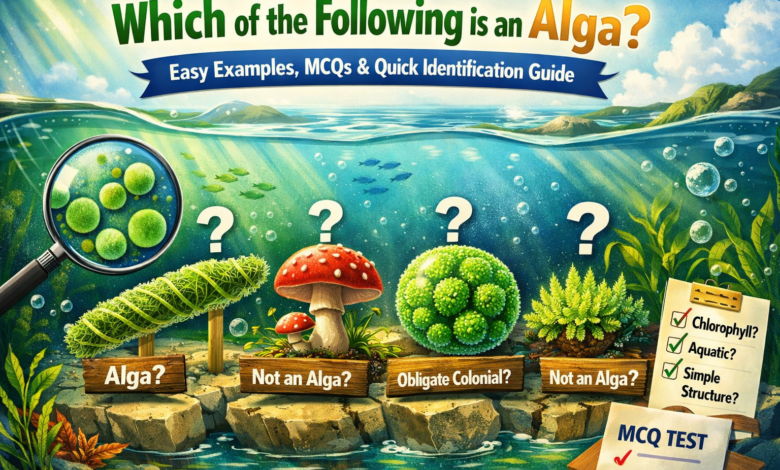
Introduction to “Which of the Following is an Alga”
In biology studies, students often come across questions like which of the following is an alga, especially in exams and quizzes. These questions may look simple, but they are designed to test how well someone understands basic biological classification.
Many learners feel confused because algae share similarities with plants, fungi, and even some microorganisms. However, once the core concept is clear, answering such questions becomes quick and easy.
What is an Alga?
To answer which of the following is an alga, it is important to understand what algae actually are. Algae are simple, chlorophyll-containing organisms that can make their own food through photosynthesis. They are mostly found in water and have a simple body structure.
Unlike higher plants, algae do not have true roots, stems, or leaves. This is one of the key features that helps differentiate them from other organisms in exam questions.
Which of the Following is an Example of Algae
When students are asked which of the following is an example of algae, they should look for well-known examples such as Spirogyra, Volvox, Ulva, and Chlamydomonas. These are commonly used in textbooks and exams.
These organisms are classified as algae because they contain chlorophyll, live in aquatic environments, and have simple structures. Recognizing these features makes it easier to choose the correct answer without confusion.
Which of the Following is Not an Algae
Another important variation is which of the following is not an algae. In such questions, options are usually designed to mislead students. Examples like fungi, mosses, or bacteria may appear similar but are not algae.
Fungi lack chlorophyll, bryophytes like moss are land plants, and bacteria are entirely different at the cellular level. Understanding these differences allows students to eliminate wrong answers quickly.
Which of the Following Green Algae is an Obligate Colonial
A slightly advanced question is which of the following green algae is an obligate colonial. This refers to algae that live in colonies where cells depend on each other.
Volvox is the most common correct answer in this case. It forms spherical colonies, making it different from unicellular algae or filamentous forms. This concept is frequently tested in exams.
Which of the Following is an Incorrect Pairing Alga
Students may also see questions like which of the following is an incorrect pairing alga, where organisms are matched with wrong classifications.
For example, pairing fungi with algae or labeling non-photosynthetic organisms as algae would be incorrect. These questions test attention to detail and conceptual clarity.
How to Solve MCQs on Algae Effectively
To confidently solve which of the following is an alga, students can follow a simple strategy. First, check if the organism has chlorophyll. Second, see if it lives in water. Third, identify whether it has a simple structure.
Eliminating clearly incorrect options saves time and improves accuracy. Regular practice also helps in recognizing patterns in exam questions.
Practice Questions and Answers
Practicing questions like which of the following is an example of algae helps strengthen understanding.
Example: Which of the following is an alga?
Options: Spirogyra, Mushroom, Moss, Bacteria
Correct Answer: Spirogyra
This is because Spirogyra has all the characteristics of algae, including chlorophyll and aquatic habitat. Practicing such examples builds confidence.
Importance of Algae in Biology
Learning about algae is not just about answering which of the following is an alga, but also understanding their role in nature.
Algae produce a large portion of the oxygen in the atmosphere, support aquatic life, and are used in industries such as food and biofuel production. Their importance makes them a key topic in biology.
Conclusion
Questions like which of the following is an alga become simple when the basic concepts are clear. By focusing on characteristics, practicing examples, and using elimination techniques, students can answer accurately and confidently.
A strong understanding of algae not only helps in exams but also builds a solid foundation in biological sciences.
Also Read: Shaquieta Boyd: A Trailblazer in Education and Community Leadership